Blog
Ways to Manage Your Mood
Mood disorders, such as depression and bipolar disorder, interfere in the brain’s ability to regulate mood and emotion. Other mental and general health disorders make moods hard to adjust.
When you experience moods you don’t want, whether they’re too high or too low or too anxious or too erratic, there are things you can do to regulate and improve your moods. Three ways to manage your mood are.
- Distance yourself from you mood. Moods are fleeting emotions; they’re not the core of your being.
- Do something. Moods, no matter what they are, have a way of paralyzing us. Acknowledge your mood, and then act anyway. You don’t have to wait until you feel better to get going.
- Practice mindfulness. Instead of fixating on your mood, use your senses to pull yourself out of your head and into the present moment. Then, find something pleasant to focus on.
Self talk for decreasing anger

Signs of Self-Stigma
Stigma is the prejudicial and negative treatment we receive when others only see an aspect of us instead of who we are as a whole person. Facing stigma from others can be damaging and hurtful. Do you ever stigmatize yourself?
Self-stigma is the biased, negative judgment that we impose on ourselves. You may have stigmatized yourself if you’ve
- Paid more attention to certain aspects of yourself more than you do on other aspects of yourself
- Caught yourself over thinking the words, actions, and nonverbal behaviour of others, “knowing” that you’re not measuring up
- Noticed self-derogatory thoughts running through your mind
- Found yourself agreeing with your derogatory thoughts
- Felt that you’re not good enough for someone or something
- Felt worthless
When you stigmatize yourself, you are seeing yourself unevenly. Rather begin to notice when you’re self-stigmatizing, and intentionally shift your focus to something good about yourself. Purposefully keep track of your positive thoughts and actions. When you shift your focus this way, you will gradually stop stigmatizing yourself and you may find that you like yourself.
Stages of grief

What is DBT?
Dialectical behaviour therapy, or DBT, is a specific approach to mental health therapy. DBT comes from cognitive behavioural therapy (CBT). DBT emphasizes thoughts, emotions, and behaviours. The term “dialectical” refers to the fact that people understand concepts in relationship to their opposites. With DBT, people learn to manage strong emotions by coming to understand their opposites.
There are certain aspects of this therapeutic approach that are important to know. DBT:
· Reduces black-or white thinking
· Helps people reduce time spent in crisis
· Teaches acceptance, mindfulness, interpersonal skills, distress tolerance, and emotional regulation
· Allows people to develop and use what is called wise mind
The DBT skills are useful in helping people live a life of wellness, hence it is used with many different people with many different mental health conditions.
Tips for achieving your mental health goals
Creating mental health goals is a great way to take charge of your wellbeing. Here are some tips for achieving the mental health goals you set for yourself.
A commonly used formula for working toward goals is the acronym SMART. This system provides a guideline for creating goals.
-Specific
-Measurable
-Achievable
-Realistic
-Timely
Creating SMART mental health goals helps ensure success. When you create deeply meaningful goals, achieving them is in your power. Some things to keep in mind:
· Be intentional what outcome do you want for yourself and your life, and why? How will things be different when you reach it?
· Create a plan that includes taking small steps toward your goal every day.
· Keep your wording positive—what you do want rather than what you don’t want.
Positive thinking
Sometimes it is difficult to move away from negative thinking patterns. One way to move away from these are to incorporate more positives into your day. Below you will find a few tips on how to do so.
1. Look for funny or cute picture, even an inspirational quote to break a bad mood:
2. Notice what didn’t go wrong, went as planned-or better than expected.
3. A smile from a friend or stranger.
4. The taste of your food or a warm drink.
5. Pushing yourself to do something you’ve been putting off. Even though you needed to do it, reward yourself for getting it done!
A therapist’s prescription for better mental health

Do not let OCD control your life
Everyone has some amount of obsessive-compulsive behaviour. For instance, maybe you keep straightening your favourite picture on the wall. There are certain things in each person’s life that need to be a certain way and when that does not happen, anxiety takes over. However, when the obsessions and compulsions start to take over your life, affect you negatively and interfere with day-to-day activities, it becomes OCD (Obsessive Compulsive Disorder). It is not healthy when certain behaviours take control of your life. People who struggle with OCD should try to step back and try to see what parts of the mental illness can be changed or redirected. By taking the time to pick apart the behaviours that tend to control daily activities, redirection can become somewhat clearer. By working with a therapist problematic behaviours can be seen and hence stopped. It is important to focus on redirection and positivity to bring about change.
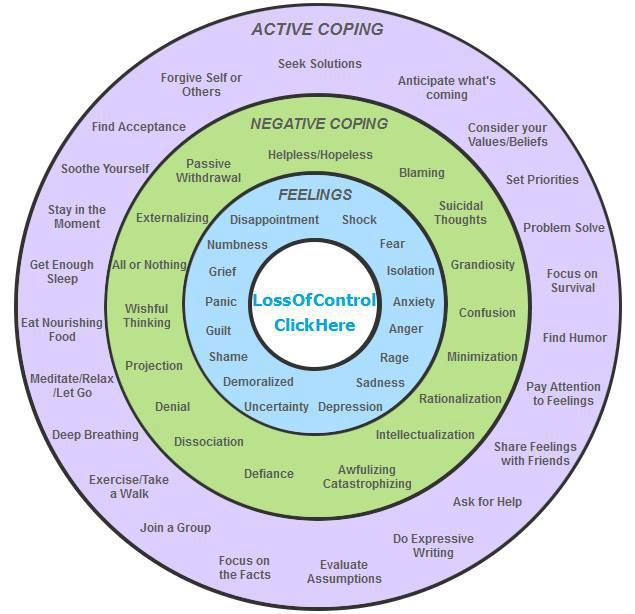
Feelings and different kinds of coping